


How Linn’s, turned Cambria into a destination for olallieberries
VIEW THE FULL ARTICLE
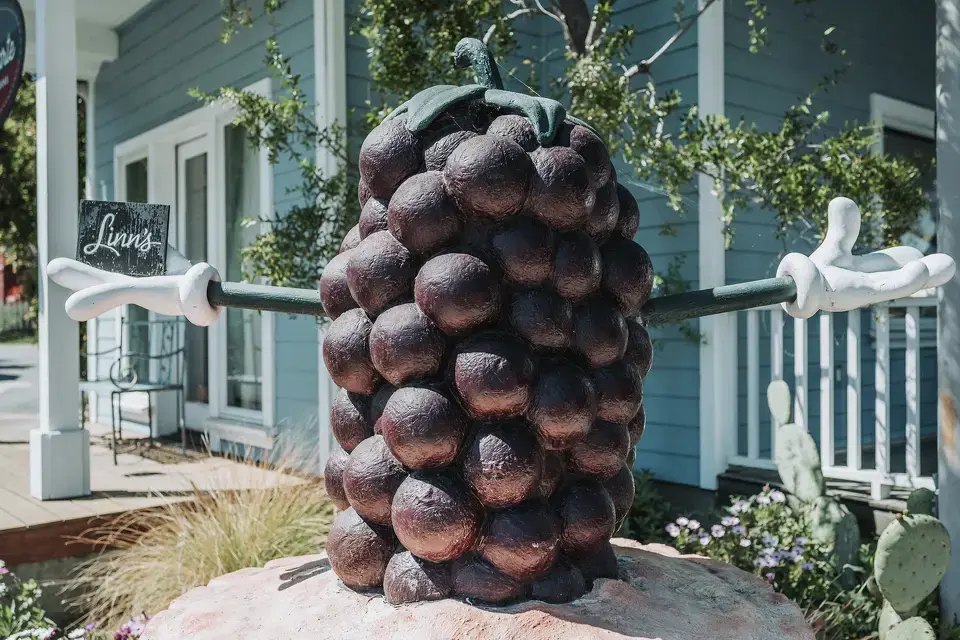
Open the menu at Linn’s Restaurant, and among the classic Central Californian offerings like grilled artichoke, Dungeness crab Benedict and tri-tip sandwiches, you’ll find a curious theme. Depending on the time of day and the meal you’re ordering, you’ll find any of 30-some-odd menu items featuring the olallieberry.
There are the usual subjects, like olallieberry pastries, pancakes with olallieberry topping, even olallieberry milkshakes or lemonade. But there are also unexpected, some might say unusual, offerings: spare ribs served with a side of apple-olallieberry slaw, a burger glazed with an olallieberry reduction and grilled salmon with a spicy olallieberry sauce.
hat’s not even counting the restaurant’s gift shop, which sells everything from olallieberry preserves and candy to olallieberry-infused tea and olallieberry cream cake by the slice to go, which I could not resist, even though it was 10 a.m. and I had just eaten an olallieberry muffin with my omelet and then a slice of olallieberry pie with my second cup of black coffee.
When you arrive in Cambria, if you’re coming from somewhere congested and noisy like I was, you’ll likely be struck by its deep sense of serenity. The village of 5,000 is full of craftsman-style cottages, art-filled boutiques and a practically movie set level of quaintness (which has inspired movies like “Arachnophobia” to film there).
Cambria is a little bit like Solvang, on the other side of San Luis Obispo, but without all of the Danish influence that makes the Santa Ynez Valley town such a tourist attraction. Solvang can keep its wooden shoes and its aebleskiver. Cambria has olallieberries.
It all started with a good piece of advice. By 1979, John and Renee Linn had moved their family to Cambria from Colorado, with dreams of opening a pick-your-own berry farm. A farm consultant recommended they plant olallieberries, a blackberry-raspberry hybrid developed in Oregon and released to the public in 1950 that grew well on the Central Coast but were still relatively unknown in the area.
Renee started baking fruit pies and making preserves from her own recipes and selling them at the farm’s store, Linn’s Fruit Bin. Demand for the pies turned into demand for more food, which the Linns started serving out of their farm stand. Eventually the Fruit Bin became such a popular location that the family opened Linn’s Restaurant in downtown Cambria in 1989. Though chef Matt Beckett develops new dishes, the menu is largely based on Renee’s original recipes and, of course, the public’s appetite for one particular fruit.
But how does it taste? In a word, tart. The olallieberry has less natural sugar than some other berries. “When we add sugar,” says Aaron Linn, John and Renee’s son, “we have a product that still tastes tangy and tart, like fruit.”
I love a blueberry pie, but sometimes find it too sweet — so when I tried the olallieberry pie, I was pleasantly surprised at that balance. It was definitely dessert, but it had a brightness that was refreshing and worked nicely with the flaky crust. Maybe, too, I was just appreciating eating something I had never even heard of before I found myself in Cambria.
It turns out the fruit isn’t so easy to come by.
“The olallieberry puts out far less by acre than any blackberry ever would really,” explains Linn, who is now the general manager of the Linn’s operations. “So people don't choose to grow them, and they therefore aren't available out there in the world.”
The season is also incredibly short — just late May into June, when the Linns find themselves buying nearly every available olallieberry from farms up and down the West Coast. It’s not that they don’t still grow them on the family farm. It’s that they could never possibly meet the demand with just their own land. “We buy them from as many growers as we can find,” Linn says.
The family’s story isn’t so different from another California farm that turned its popularity into an opportunity for much more.
Olallieberries are genetically similar to the boysenberries that made Knott’s Berry Farm into the behemoth attraction and household name it is today. But Linn says that, though they considered it, his family didn’t want to take that route. John Linn’s philosophy has always been, “to stay small and special,” Aaron Linn says. “That's my intent as the second generation and handing it on later to my kids. It's impossible to keep the quality. If you don't stay small and special, you don't have the control.”

In Cambria, olallieberries have become more than just a food, but a cultural phenomenon that attracts tourists year-round. Foods made with the berries make regular appearances at local grocery stores and the Cambria farmers market, and there’s even a bed-and-breakfast named after the fruit, the Olallieberry Inn, which offers olallieberry tea and olallieberry yogurt to its guests. The Visit Cambria website even has a guide to the fruit, including recipes.
The town hosts an Olallieberry Festival every summer, which has been on pause because of the pandemic but is expected to be back in full force next year, a representative for the town told SFGATE.
After I left Linn’s, I ate my olallieberry cake later that night (OK, afternoon), sitting in my cozy room at the Apple Farm Inn, a fire crackling and the late day sun streaming in, savoring the tartness of the berry and the sweetness of the vanilla cake, thinking about the treasures you find on the Central Coast if only you stop to take a taste.
March 25, 2022
Theme Parks Contributing Editor
Julie Tremaine is a contributing editor for SFGATE covering Disneyland, Universal Studios and theme park travel.


Comments